Some cool aggressive dog train images:
dog attack jerk’s dogs
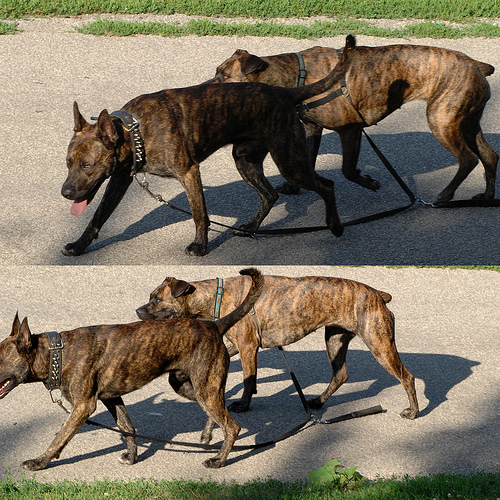
Image by postbear
the dog attack asshole’s dogs, story below. apologies for the blur, i was shooting, on my phone and trying to keep the asshole and his dogs from coming near tthe wounded dog while not being bitten myself.
yesterday afternoon and evening i took a walk through cabbagetown since i’d been shooting everywhere else but near home lately. after a while i thought i’d head over to riverdale park, and just as i entered it the screaming started. the asshole pictured here had both his dogs off their leashes and they had cornered another dog, one of them repeatedly attacking him. i ran (well, walked quickly, as the knees allowed) over, yelling, along with a couple of other people who were nearby, and we managed to scare the attacking dogs off. the other dog, who’d clearly been bitten a few times, seemed not too badly off, thankfully. we yelled at the idiot above to leash his dogs and get them under control, which he refused to do - he even refused to leave the park until i took some shots of him and pulled out my phone to call the police. the leashes went on then, but he didn’t take hold of the other end.
the 911 call proved useless - i was transferred around to non-emergency and a couple of other departments, and it quickly became clear that the cops didn’t give a flying fuck. the indifferent human i last spoke to offered to put in a request for a car to come out to us, but knowing response times (a neighbour had her house broken into the other day and waited for three hours for a couple of bored uniforms to show up and ask if she had insurance), i gave up.
the dog’s owner was in distress, but the dog stayed friendly and walked around, even greeting the new dog arrivals in a friendly manner. still, she took him to her vet and his wounds, i found out later when she called me, were serious, including one nasty tear on his throat. i sent her these shots last night, and she’s going to post a warning about him in the park and nearby - we’re trying to sort out other ways to warn people away from this fucking idiot, too. he apparently hangs out on the far side of riverdale park, near broadview and danforth.
i don’t blame the dogs. i blame this shithead and the other people who train powerful animals to be aggressive and who take zero responsiblity for their actions, to the point that they even refuse to control their pets because they are afraid of being bitten themselves. animal control shouldn’t euthanise these dogs, they should remove them from his home and let them go be retrained somewhere away from other animals until they can be resocialised. the human can be euthanised, though - he’s clearly useless and we’re an overpopulated species.
octoberpassive-aggressive-dog-training
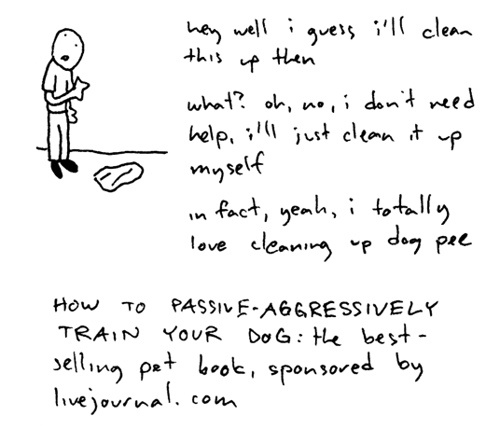
Image by machoroboraza
Technorati Tags: Aggressive, Cool, images, Train


